Eye tests
45 minutes, £45, and the whole of it spent on your eyes. The test is booked as one appointment with one optometrist; you are not passed between rooms and you are not sold to in any of them.
NHS-funded tests are available if you are eligible — under 16, over 60, diabetic, or on a qualifying benefit. We check entitlement when you book, not after.
History first, chart second
The first ten minutes are questions: what you do at what distance, what has changed, what runs in the family, what you take. Half the useful findings of a sight test are in that conversation, and the chart only tells us where to start.
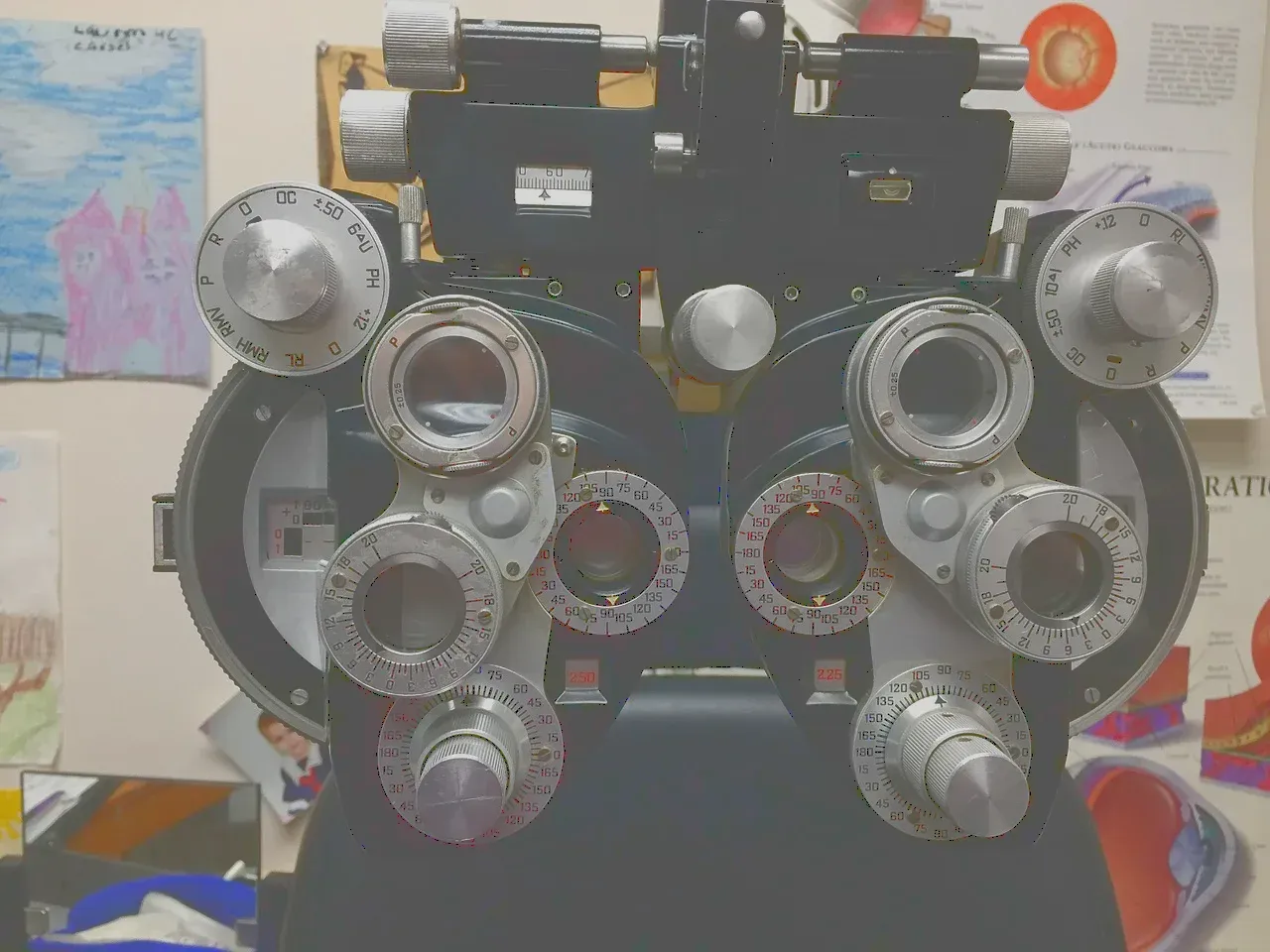
Better with one, or two?
A subjective refraction is a bracketing search. Two lenses are put up, a quarter of a dioptre apart, and you say which is better. Neither is a trick question and "they're the same" is a real answer — it means the bracket has closed.
The steps are 0.25 D because that is the smallest change most eyes can reliably tell apart. Finer steps do not make a better prescription; they make a longer appointment.
The pinhole, and what it rules out
Somewhere in the middle of the test you will be handed a black disc with a small hole in it. If your reading improves through it, the blur is a focusing error and lenses will fix it. If it does not, no lens we can make will help, and the appointment turns into a different conversation — what we look for, and where we refer.
Health checks in the same fee
Pressures, fields, retinal photographs and an OCT scan are part of the £45 test. The scan takes about four seconds an eye and it is kept, because its value is in being compared with the next one.
You leave with your prescription on paper. It is yours; you can spend it anywhere.